
How to Play Saxophone Easily: 8 Beginner Tips & Step-by-Step Lessons
If you've recently bought a saxophone and are wondering how to play saxophone for the first time, you're not alone. Like all beginner saxophone players, you assume months of saxophone lessons are required before you can make a decent sound or play a real piece of music.
The reality is much simpler. With the right guidance, you can learn how to play saxophone step by step, whether it is a soprano, alto or tenor saxophone. From opening your case for the first time to performing your first piece with accompaniment, we are here for you.
Tomplay is designed to help beginners achieve exactly that. In every lesson, you choose a piece you'd like to learn and gradually acquire the skills needed to play it confidently using sheet music.
Along the way, you'll discover the essential techniques and theory concepts required to become an independent musician.
▶️ Download Tomplay for free today and try our beginner saxophone lessons free for 14 days!
1. Get Familiar with Your Saxophone for Beginner Saxophone Players
Before learning how to play saxophone, it's important to understand the different parts of your instrument. Open your case carefully and identify:
- The main body
- The crook (or neck)
- The mouthpiece
- The ligature
- The mouthpiece cap
- The reed
- The neck strap
Most saxophone cases also contain cleaning accessories, cork grease and spare reeds. Taking a few minutes to identify these components will make assembling your instrument much easier.

2. Saxophone players set up their reed correctly
One of the most important steps when learning how to play saxophone is preparing the reed properly. Without the reed, your saxophone simply won't produce a sound. Reeds come in a variety of different materials, strengths and sizes: cane reeds are the standard choice for many players, while synthetic reeds offer an alternative, and some saxophonists prefer a half strength for a more precise fit. Choosing the appropriate hardness also helps with optimal tone production.
A properly positioned reed helps you:
- Produce a clearer tone
- Play more comfortably
- Improve response across all notes
Remember the three essential steps:
- Prepare: Carefully remove your reed from it's plastic case or wrapper. Lightly moisten the thin, unmarked side with your tongue, then wet the reed before placing it on the mouthpiece. This loosens the fibres and makes it easier to play.
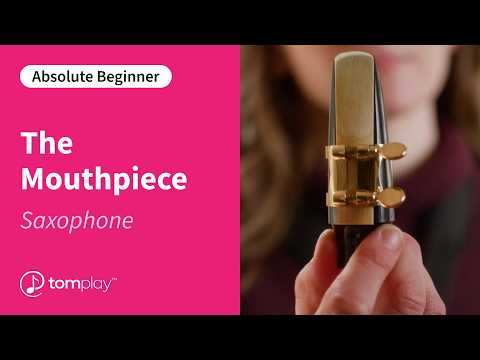
- Position: Remove the mouthpiece cap and ligature, setting them aside. Place your reed against the flat part of the mouthpiece, ensuring it lies on top rather than inside. Line up the tip of the reed with the end of the mouthpiece so that they're in line (not over, or above).
- Secure: Slide the ligature into place and tighten it gently. Hold the reed in place and gently slide the ligature over the mouthpiece and reed. The screws should sit on the right-hand side. Some ligatures have screws underneath, others on top—both are fine, just make sure they’re on the right. Gently tighten the screws to secure your reed in place. Higher quality reeds usually improve sound quality and are less likely to splinter in your mouth.
Getting this setup right from the start will make learning how to play saxophone significantly easier.
3. Play the saxophone with the right embouchure
Now it's time to learn one of the most important fundamentals of how to play saxophone: your embouchure. Embouchure simply means the position of your mouth on the mouthpiece.
A simple way to remember it is:
- Roll: Take your mouthpiece and hold it with the reed facing the ground. Now roll the mouthpiece over your bottom lip so that your bottom lip creates a cushion between your lower teeth and the reed. Don't bite into the reed, just let the mouthpiece gently sit on your lower lip.
- Rest: Once your bottom lip is in place, gently rest your top teeth on the top of the mouthpiece. Your top teeth should roughly be in line with your bottom teeth, resting around the point where the reed and the mouthpiece touch - this is approximately 1cm from the edge of the mouthpiece
- Seal: When your teeth are in place, seal your lips around the edge of the mouthpiece applying equal pressure from all sides. This is important to stop any air escaping when you start to blow. These small details matter.
Don't worry if it feels unusual at first. Every beginner needs time to develop a comfortable embouchure. Many beginners also struggle to get enough air at first. Keeping an open throat helps the air move more freely. Your first sound may not be perfect, and that's completely normal. What matters is learning how the instrument responds to your air and embouchure. This is the moment when many beginners realise they are truly starting to play the saxophone.

4. Make your first saxophone sound with our saxophone lessons
Learning how to play saxophone becomes exciting when you finally produce your first sound. Attach your mouthpiece to the crook and reform your embouchure.
Now that your mouthpiece is ready, cover it with the mouthpiece cap and rest it in your case. Next pick up your saxophone crook! Hold the crook in one hand and in the other hand pick up your mouthpiece. Being careful not to apply too much pressure, use a twisting motion to slide your mouthpiece onto the cork, leaving roughly 1cm of cork showing. If your saxophone is new, or the cork feels stiff, apply cork grease to help the mouthpiece slide on more easily.
Once that's in place, remove the mouthpiece guard and reform your embouchure using the 'Roll', 'Rest' & 'Seal' method covered previously. Now keep your embouchure in place and blow air into your mouthpiece and connected crook, practising breathing from the diaphragm for better control and using breathing exercises to manage airflow while you play. Try and keep your cheeks flat and avoid biting too hard. Good breath control is what lets you hold long notes steadily.
Do you hear a sound? Great job! Try this one more time focusing on squeezing the muscles around the mouthpiece rather than 'biting' with either the top or bottom teeth.

5. Assemble the Full Saxophone
Congratulations you've just made your first sound! Let's complete your saxophone setup by adding the main body. Cover your mouthpiece and attached crook and rest in your case, then pick up the main body of the saxophone via the horn end. Attach it to your neckstrap using the small loop midway on the back of your saxophone
Now pick your mouthpiece and crook back up and attach it to the main body. To do this first remove the end plug and leave this in your case. Next, unscrew the screw at the top of the saxophone body, pick up your crook & attached mouthpiece, and gently twist the crook into place. You need to align this line with the black or gold mechanism below. Once it's in place, tighten the screw.
Finally, raise or lower your neckstrap so when you bring your mouthpiece to your mouth it is in line with your lips and you do not need to push your neck forward to play, helping you keep a straight body position with comfortable alignment.
If you're practicing with sheet music, a music stand helps maintain good posture.
Well Done! You've now assembled your saxophone for the first time.

6. Learn How to Hold the Saxophone Correctly
Now that your sax is assembled, let's go over how to hold it. While the saxophone might seem complicated at first, your saxophone has two helpful features to guide your hands: Thumb Rests and Pearled Keys — and learning it depends on both breath control and finger dexterity. Avoid forcing the keys, too, since delicate keywork can get bent.
You'll find two thumb rests on your saxophone - one which sits above the neck strap loop and is shaped like a circle, and one below which looks like a curved hook. The number of pearled keys varies between saxophones, but there are always 6 main pearls to guide your fingers.
Left Hand: Place your thumb on the top thumb rest at a 45 degree angle with the tip of your thumb resting gently on this key. Let your hand curl into a relaxed "C" shape and place your index, middle and ring fingers on the main 3 largest pearls at the front (image). Your pinky finger will natrually rest on this small key below.
Right Hand: Hook your right thumb underneath the lower thumb rest. Again, curl your hand into a "C" shape and rest your index, third and fourth fingers on the lower three pearls. Your pinky finger will rest on the top key beneath the pearls. Try and keep your fingers relaxed, and avoid any sideways pressure on nearby keys.
Once your hands are in place, form your embouchure and try making a sound. Remember your saxophone comes to you, not the other way around. If the mouthpiece feels too low, adjust your neck strap so the tip lines up with your lips, and whether you sit or stand, keep your back straight and shoulders relaxed.

7. Play Your First Note: B
Now for one of the biggest milestones when learning how to play saxophone: your first note. The first note introduced in Tomplay’s lessons is B.
To play B:
- Place your hands in the correct position
- Press the left-hand index finger key
- Form your embouchure
- Blow a steady stream of air
Hold that B as a long tone to build steady pitch and consistent tone, and listen with your ear to stay in tune.

Congratulations — you're officially playing the saxophone! This simple note forms the foundation for many beginner melodies and exercises, helping you learn basic fingerings and control each note sound.
8. Play Your First Piece with Sheet Music and the Backing track
One of the biggest advantages of modern saxophone learning is that you don't have to spend months practising exercises before playing real music. Once you've learned your first note, Tomplay guides you towards performing the songs you love, starting with a song that matches your current level.
Start by:
- Listening to the piece
- Following the score
- Practising in Wait Mode
- Slowing down the tempo if needed
- Playing along with the accompaniment
This approach makes learning how to play saxophone far more engaging because you're playing music from the very beginning, which helps keep practice enjoyable. Instead of practising isolated exercises, you're immediately applying your new skills in a musical context.

If you're serious about learning how to play saxophone, remember these principles:
- Focus on good setup habits from the beginning
- Take time to develop your embouchure
- Practice for at least 30 minutes a day
- Practising scales builds finger dexterity
- Listen carefully to your sound and aim for a soft, controlled tone when the music calls for it
- Let each session cover tone, technique, and artistry
- Play music you genuinely enjoy as you grow into a confident saxophone player
- Use Tomplay's recording feature to record yourself and listen back to evaluate your performance
- Consider taking lessons with a teacher or a course alongside your online learning
- Many instructors teach skill levels from beginner to advanced, and music schools can provide structured learning opportunities
Most importantly, be patient with yourself. Literally every great saxophonist started exactly where you are now: assembling their instrument, making their first sound, and learning their first note.
With Tomplay, you'll move beyond those first steps quickly and begin playing real music with confidence. Through a great experience, you will master the saxophone in no time and build a skill that can enrich your life.
▶️ Download Tomplay today and start your first saxophone lesson free for 14 days.
Add a comment...