
Learn How to Play Piano Easily: 8 Practical Tips for Beginners (including step by step lessons)
If you’ve ever wondered how to play piano, you might think it requires years of training and complex theory. The truth is, learning how to play piano can be much easier than you imagine — especially when you follow the right steps and use the right tools.
With modern learning methods and interactive platforms like Tomplay, beginners can start playing from day one. Tomplay offers a vast catalogue of beginner sheet music and interactive lessons to learn how to play piano step by step with the music you love.
Tomplay is designed specifically for beginners:
- You choose a song from a wide catalogue and learn it progressively
- You focus only on the essential theory to play the song you chose
- You get instant feedback as you play thanks to our sound recognition technology
- You quickly move on to playing along with the orchestra
▶️ Download Tomplay for free today and our beginner piano lessons free for 14 days!
1. Posture and Hand Position
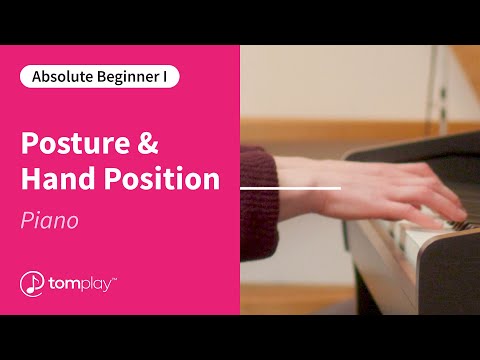
The very first step in learning how to play piano is adopting the correct posture. Sit upright, keep your shoulders relaxed, and position your hands naturally over the keyboard.
Your fingers should be slightly curved, as if you were holding a small ball. Good posture is essential when learning how to play piano, as it helps prevent tension and improves accuracy.
Learn everything about posture and hand position in the first lesson, available for free with Tomplay!
2. First 5 notes on the right hand
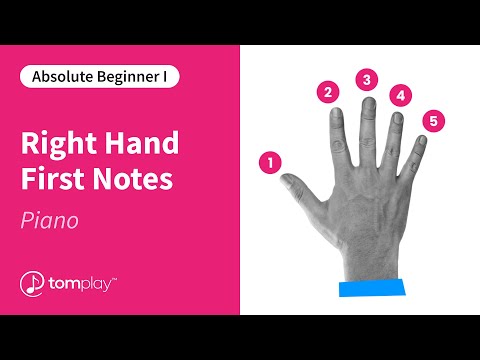
When starting to learn how to play piano, it’s best to begin with the five basic notes: C, D, E, F and G. These notes form the foundation of many beginner pieces.
Focusing on these first notes allows you to quickly understand the keyboard and start playing simple melodies. This is one of the easiest ways to approach how to play piano without feeling overwhelmed.
Learn how to play the first five notes on the right hand in the first lesson, available for free with Tomplay!
3. Learn to read the notes
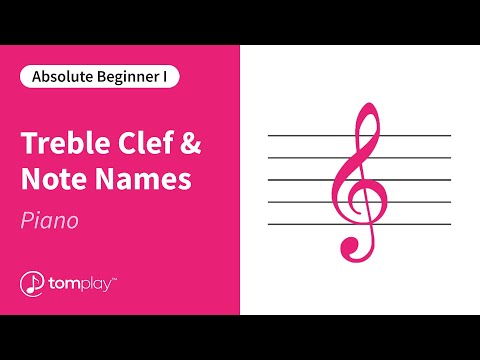
Understanding sheet music is a key part of learning how to play piano. Start with the treble clef and learn how each note corresponds to a key on the piano.
At first, it may seem challenging, but with regular practice, reading notes becomes automatic. Mastering this skill will greatly accelerate your progress in learning how to play piano.
Discover the basics of music reading in the first lesson, available for free with Tomplay!
4. Learn to read the rhythm
Knowing how to play piano isn’t just about hitting the right notes — it’s also about timing. Rhythm tells you when to play each note and how long to hold it.
Clapping rhythms or counting aloud can help you internalise timing. Developing a good sense of rhythm is essential if you want to truly understand how to play piano.
Discover the basics of music reading in the first lesson, available for free with Tomplay!
5. Discover the different note lengths
Whole notes, half notes, quarter notes… each has a specific duration. Learning these note lengths is fundamental when studying how to play piano.
By understanding note values, you’ll be able to play music more accurately and expressively. This is a crucial step in mastering how to play piano.
Discover the basics of music reading in the first lesson, available for free with Tomplay!
6. Develop a consistent piano practice routine and keep your motivation high
Consistency is key when learning how to play piano. Even short daily practice sessions can lead to rapid improvement. In fact, it’s far more effective to practise a little every day than to have long, irregular sessions. When practice sessions are too spaced out, you may feel like you’re starting from scratch each time, which can quickly become discouraging.
To stay motivated:
- Set small, achievable goals
- Play songs you enjoy
- Track your progress
Learning how to play piano should always feel rewarding. Playing your favourite pieces regularly is one of the best ways to stay engaged and make steady progress. With Tomplay, you can do exactly that by learning how to play piano through the songs you love. The lessons are built around a vast catalogue of music, ranging from pop and classical to film and video game soundtracks, making it easier than ever to stay motivated while progressing.
7. Learn with interactive tools to make progress easier
One of the most effective ways to learn how to play piano today is by using interactive tools. This is where Tomplay truly stands out.
With Tomplay:
- You can listen to the piece before playing
- You practise at your own tempo
- You receive real-time feedback thanks to sound recognition
- You play along with professional recordings
Tomplay transforms the way beginners discover how to play piano. Instead of practising isolated exercises, you learn through real music — from pop and classical to film soundtracks.
▶️ Try Tomplay Learn free for 14 days and discover how easy it is to learn how to play piano!
8. Common mistakes beginners make when learning piano (and how to avoid them)
When learning how to play piano, beginners often make a few common mistakes:
- Playing too fast: Take your time and focus on accuracy
- Skipping the basics: Fundamentals are essential to mastering how to play piano
- Practising inconsistently: Regular practice is more effective than long, occasional sessions
- Ignoring rhythm: Timing is just as important as notes
- Losing motivation: Always play music you enjoy
Avoiding these mistakes will make your journey to learning how to play piano smoother and more enjoyable.
Learning how to play piano doesn’t have to be complicated. By following these practical tips and using modern tools like Tomplay, you can start playing quickly and confidently.
With Tomplay, you’ll not only understand how to play piano, but you’ll also enjoy every step of the process by playing the music you love.
▶️ Download Tomplay now and try our beginner piano lessons free for 14 days!!
Add a comment...